I remember my first attempt at sewing a bralette, I copied the cups and cradle of my favourite half cup wired bra, eagerly sewed it together, put it on and… oof. It was bad, the whole thing just collapsed on me, boobs spilling out the front, the works. You see, every underwired bra supports the bust in much the same way – the wire gives the cup shape, the cup transfers the weight of the bust to the band (and slightly to the straps), the snug band grips onto your body, and off you go!
But when you take that wire away a major structural challenge presents itself: the snug band pulls on the cups and flattens them out. I totally failed at predicting that, and that bralette was quickly bundled into a drawer and hasn’t seen the light of day since.
I eventually figured out that lingerie designers tackle this cup-shape issue in 3 distinct ways, which gives us the three different types of wireless bra. Each gives a different type of support and distributes the weight of the bust differently, and knowing what the characteristics of each are when you shopping will help you choose the right one a lot faster.
Type 1: Compressive wireless bra
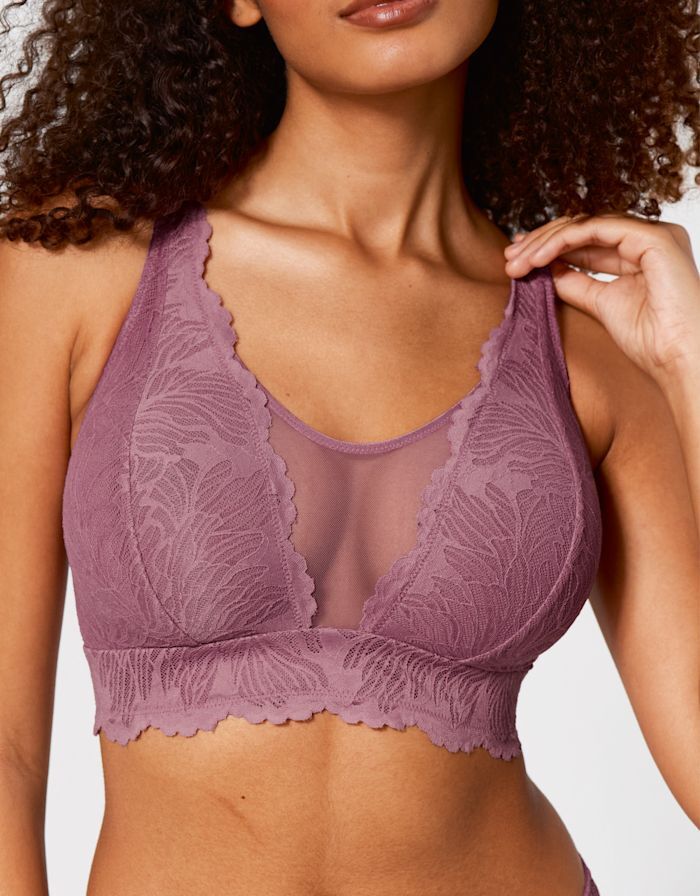
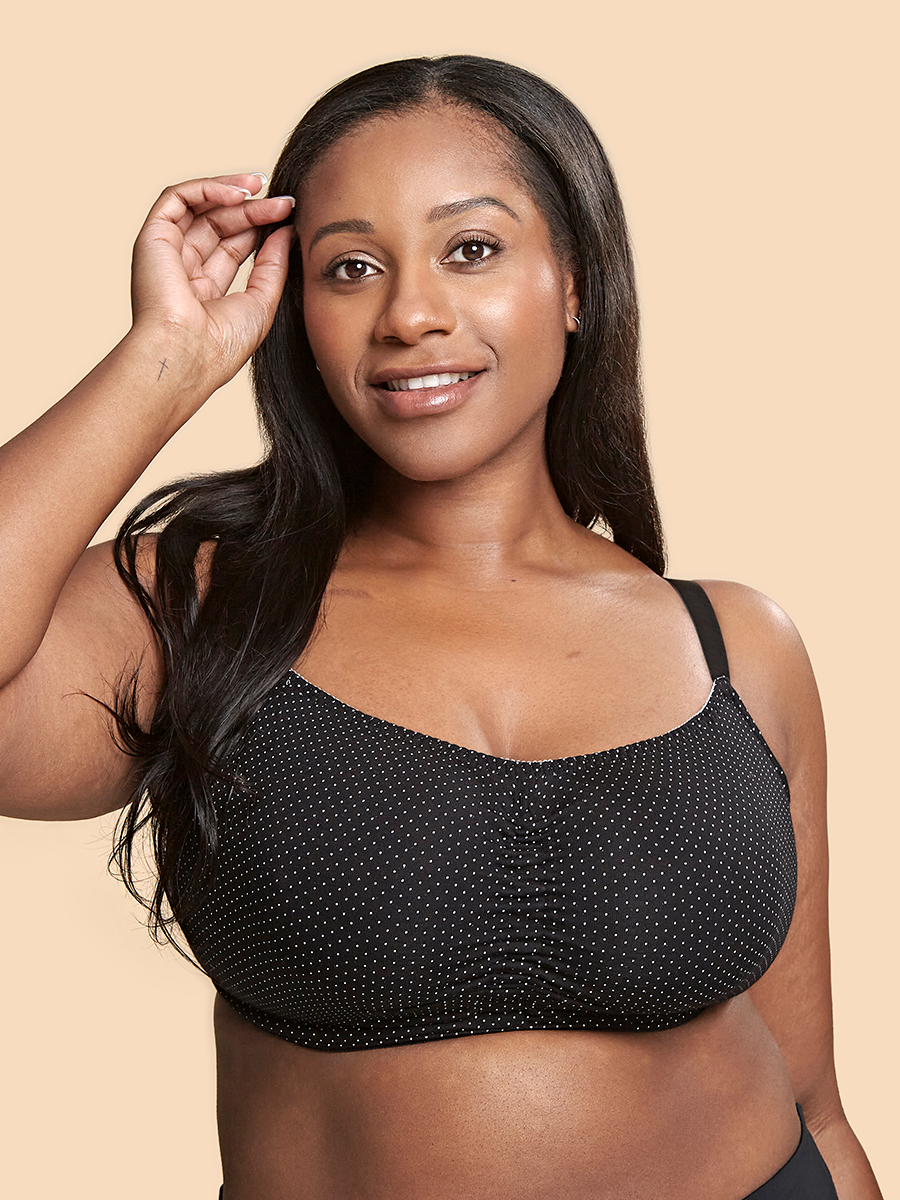
Miss Mandalay Celeste and Royce Blossom
One of the simplest ways to avoid the cups flattening is to actually not worry about it, and instead to embrace the compression as a way of lifting the bust. You do this by creating a singular bust rather than two distinct breasts, and it’s a popular choice. You see compressive support in almost all DD+ wireless bras, nonwired sports bras, and many A-DD styles
How to spot a compressive wireless bra
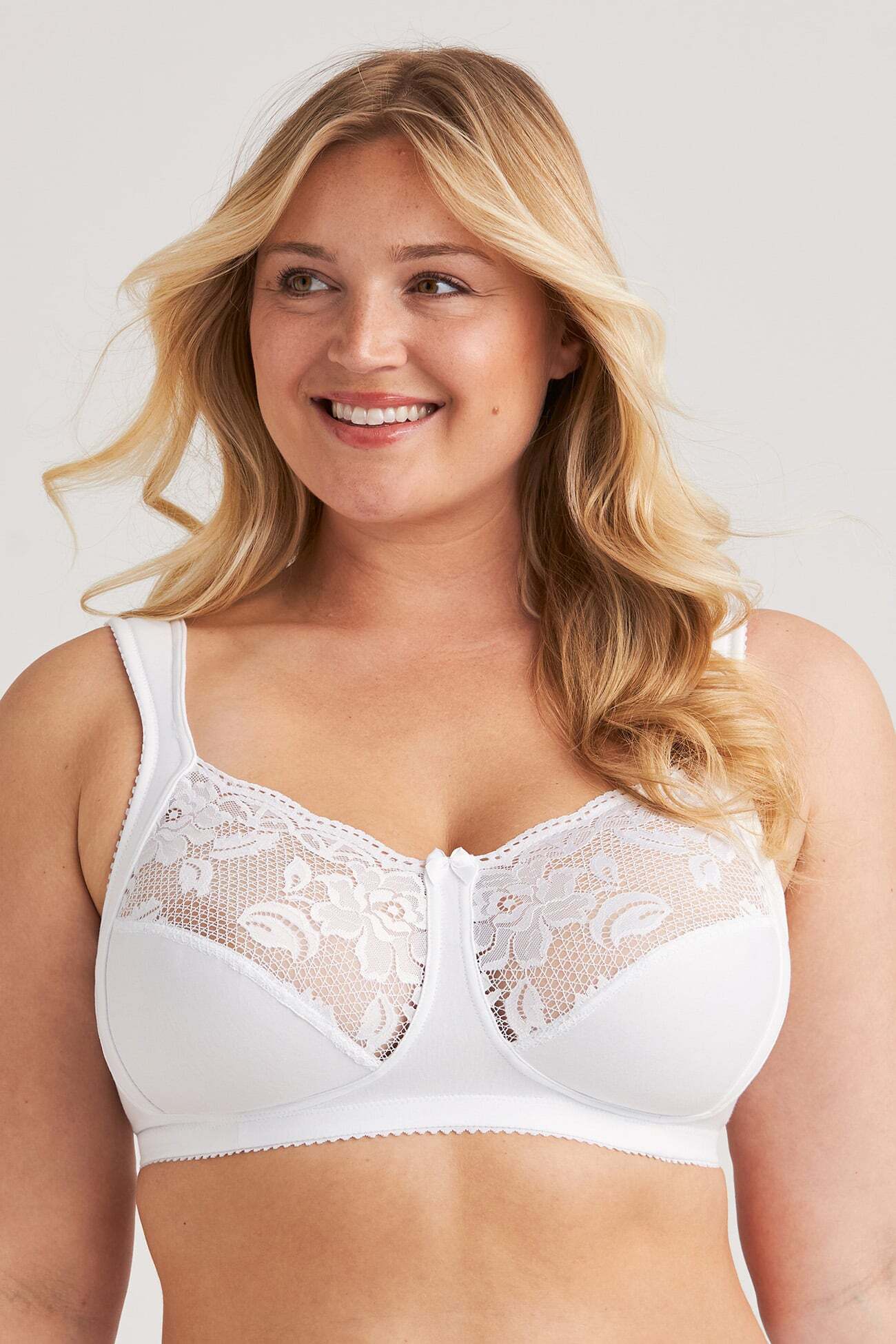
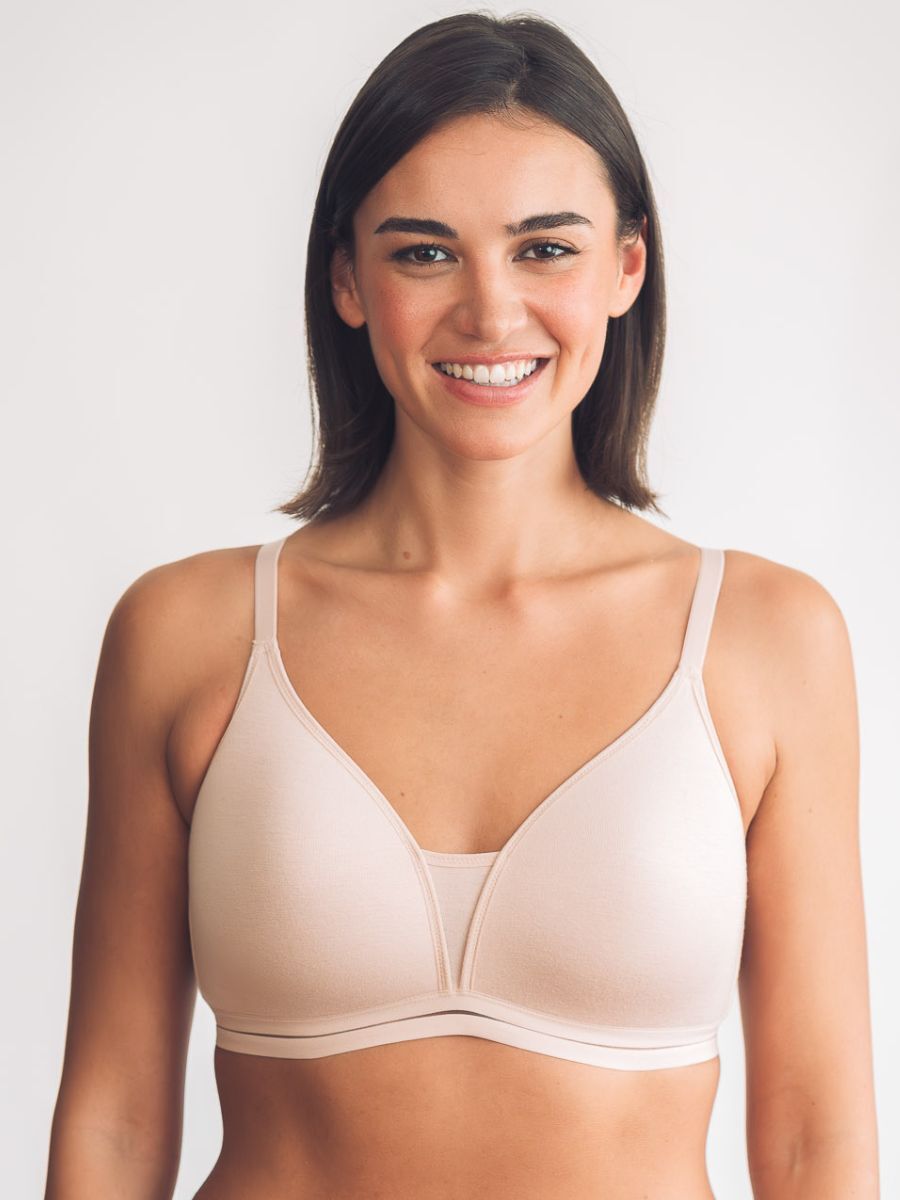
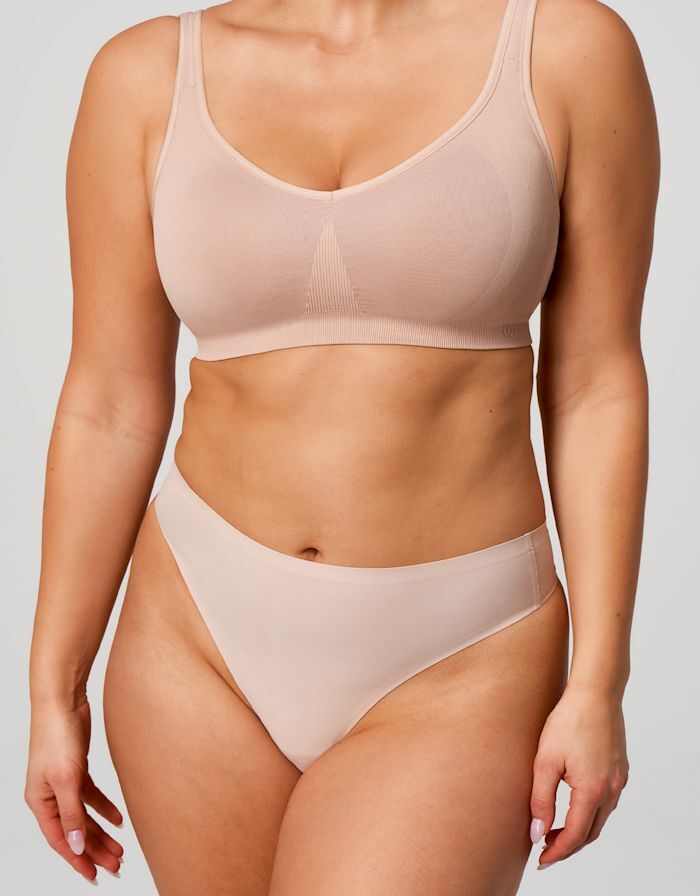
The Miss Mary Lovely Lace, Royce Posie and Bravado Sculpt Seamless all have the characteristic horizontal neckline and medium to high coverage
A compressive wireless bra is characterised by having a high “lowest point of coverage” – the band will be wide on your back, there won’t be a plunge at the front.
There may or may not be any, cups, seams or shaping in the front. The front fabric may be stretch or rigid. You may see these called bralettes, comfort bras, sports bras, nonwired, wirefree. You will often see these with a scoop or a square neckline.
What shape a compressive bra will give you
Unsurprisingly, this type of bra will give a flattened, squashed together shape, and you’ll start to get a uniboob appearance. The bust may appear slightly wider at the front, and more minimised when viewed from the side. They can also sometimes have a squareish shape from the side, and on larger breasts you may see some of the bust drooping below the underband line, even with high compression.
These can be very comfortable, and they can range from minimally supportive to a high impact sports bra.
From the top looking down, expect a very non-separated shape. If your boobs are big, you may see a square shape (rigid cups) or even a sort of pigeon breast appearance (particularly with stretch cups). Two boobs become one, this is the way of the compressive wireless bra.
How to choose a compressive wireless bra
For the best support, fabric rebound is key. Something that may be supportive at the start of the day can stretch out over time – avoid cotton or rayon (bamboo) jerseys and instead opt for fabric with a high elastane (lycra) content for the band, and similar or non-stretch fabric for the cups
An elastic band under the bust can help keep the bra in place during movement. This should be fairly snug, but the snugness at the level of your nipples is more important for keeping lift and shape all day
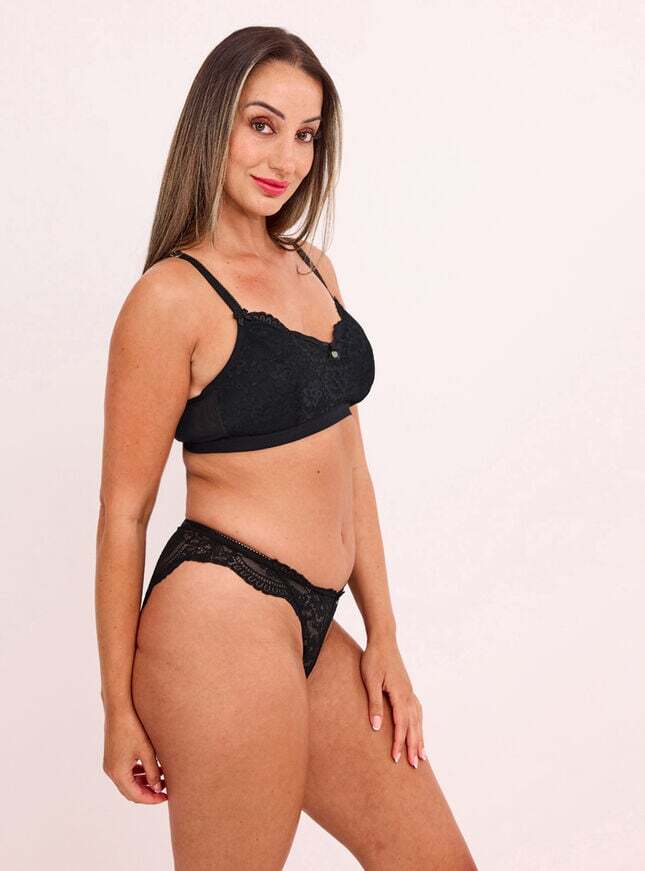
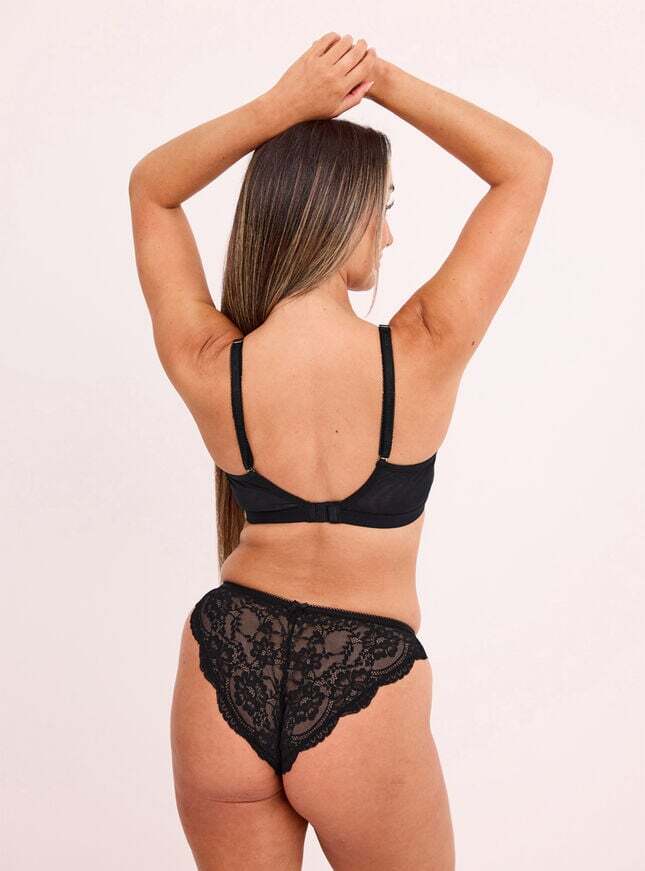
The lower elastic on the Boux Avenue Jessica Mastectomy Bra sits low, causing the hook and eye to be low too. This stops the upper part of the band tensioning across the bust and reduces the compressive support
For a larger bust, a band that fastens rather than pulls on is going to be best – this will let you get even snugger, but just make sure the hook and eye is positioned correctly on the bra: too low, and the bust compression won’t work.
When putting on the bra, make sure to position your boobs well – separate them slightly when putting the bra on and you will feel more securely supported, although you may need to readjust over the course of the day. Ensure the breasts are fully lifted and the lower band sits right at the inframammary fold
Type 2. Triangle wireless bra
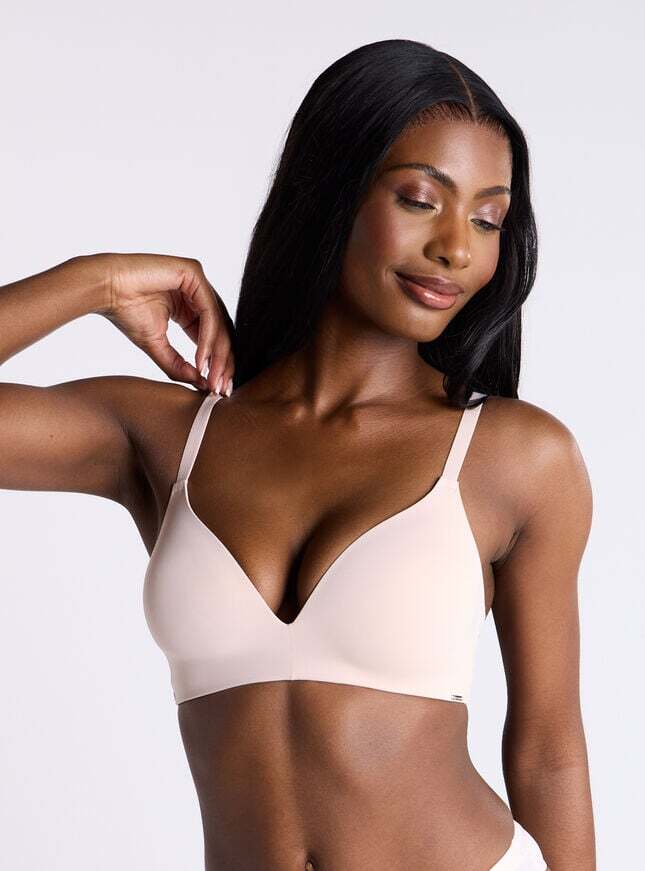
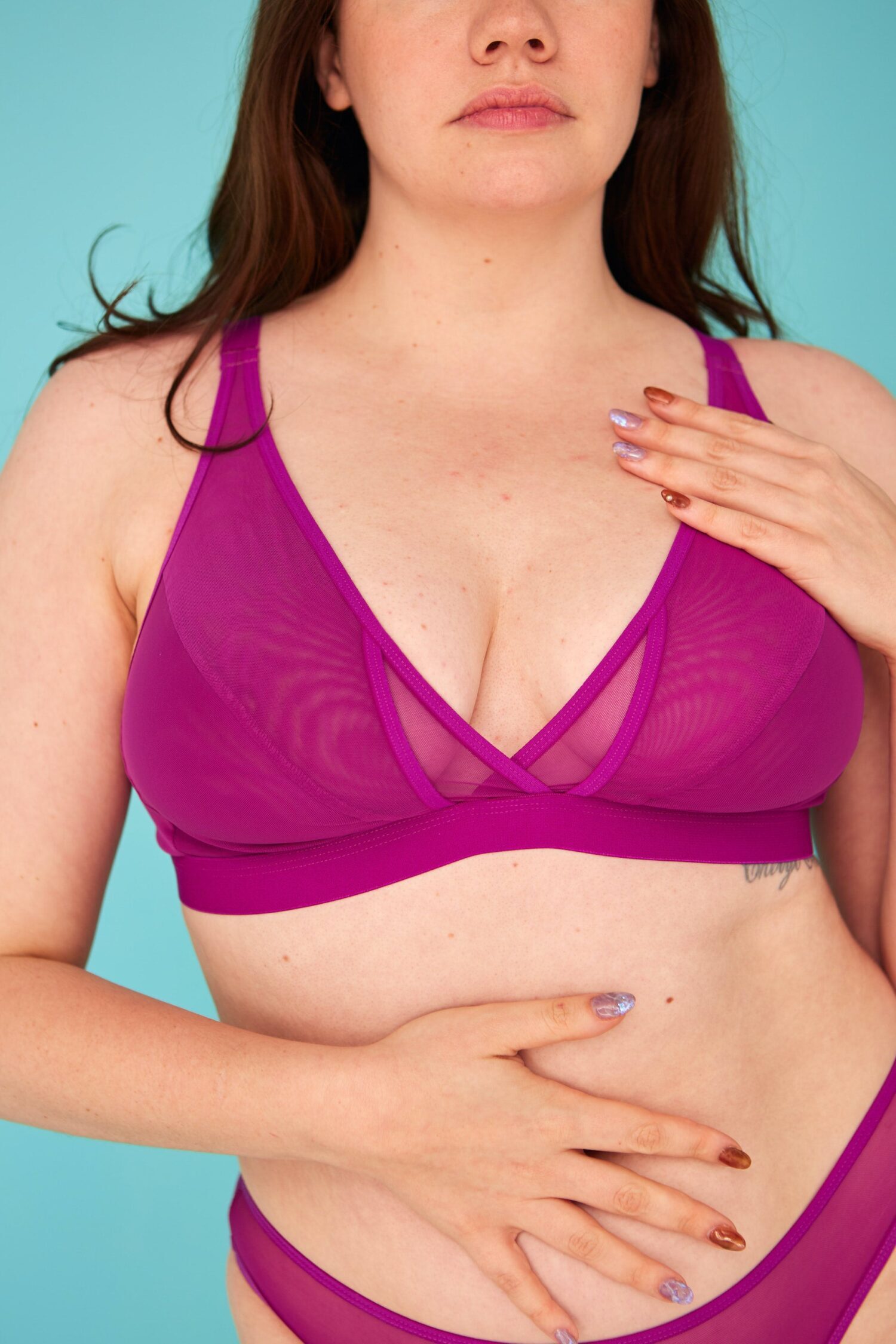
Boux Avenue Boux Avenue Comfort Microfibre Plunge, New Craft House Wren (sewing pattern)
These avoid the cup flattening problem by reducing the band tension across the bust: a low plunge means that tension only runs below the bust. This means that the band’s only job is to secure the lower part of the bra against the body. Lift therefore comes entirely from the straps in a bra like this.
What shape a triangle bra will give you
These tend to give fairly low support. They can create a separated shape or a squashed together shape depending on breast shape and the overall design, and generally the bust will have more of a teardrop, fuller on bottom appearance.
Looking down from above, smaller breasts can ofte get a rounded appearance in these bras, but larger ones may experience a squared-off shape in the centre front, as usually the neckline is not snug enough to create breast separation when they grade it (plus if they do that it can create like a super separated (\/) kinda shape if they don’t add extra roundness).
How to spot a triangle wireless bra

This crossed front is more common in larger cups, but is still a triangle bra. This is the Playtex Recycled Classic Lace Support
First, look at the neckline. Any deep plunge will be a triangle style bra, and any plunge below the nipple will likely have many characteristics of one. You will usually see an exposed elastic band running under the bust. There may or may not be a wider band at the side – don’t be fooled by this into thinking the bra will give compressive support, the lowest point of the neckline shows how high the tension can go across the breasts, and is what determines the line of tension around the body. The extra support given by a wide band in a triangle bra is minimal, and you will struggle to feel any tension at all in the upper band here.
Usually they call triangle style wireless bras bralettes but you can also see them under nonwired bras, particularly ones made out of moulded foam. You may find some compressive-triangle hybrids (denoted by a moderately plunging centre front) marketed as sports bras: I would only recommend these for smaller busts where the relative breast coverage is higher which makes them more effective at compression.
Triangle wireless bras can be foam or fabric, stretch or rigid.
How to choose a triangle wireless bra
For the best support, don’t worry too much about the band snugness – if it stays in place, that’s all that matters, and extra snugness won’t help with lift. The strap width is absolutely key in one of these bras, go for the widest straps for the best lift and comfort.
Foam is the most supportive here, followed by rigid cup fabrics. For better support, choose one with a snugger neckline and more centre front coverage, which will give it a touch of compression on the lower breast.
Type 3. Framed wireless bra
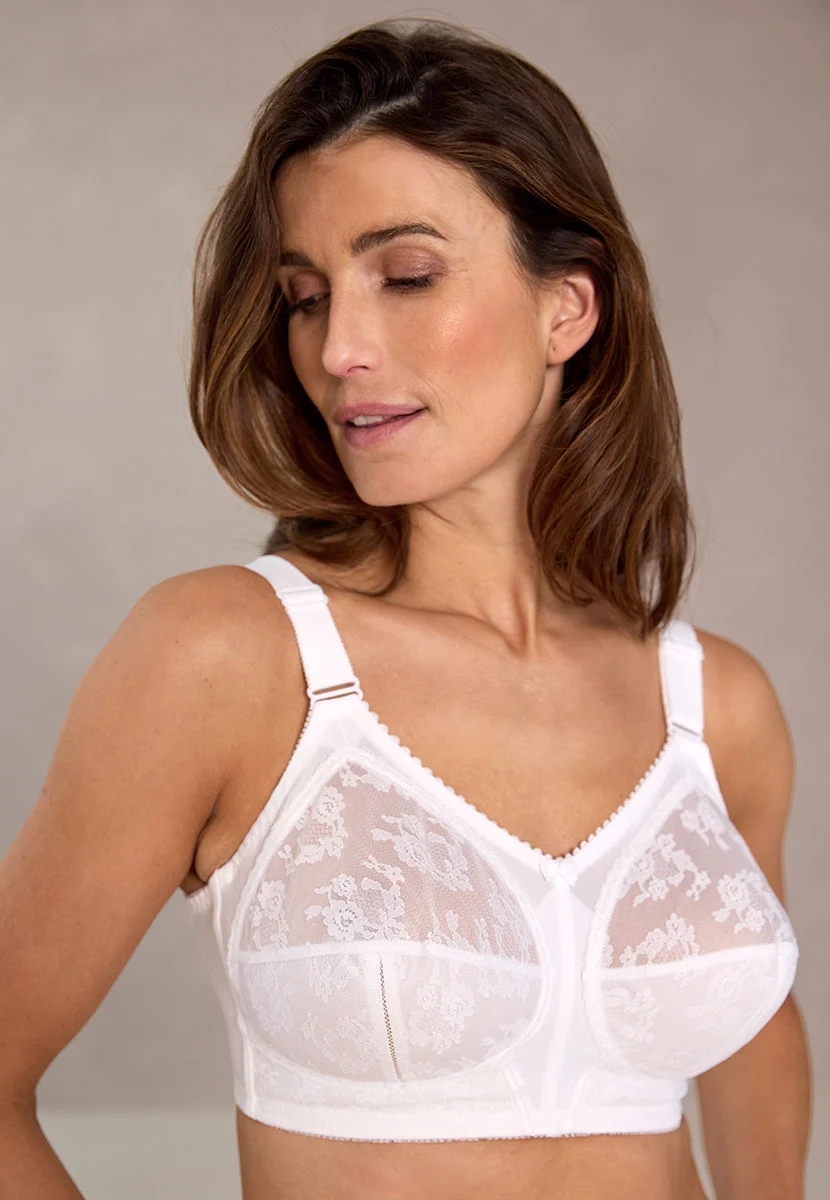
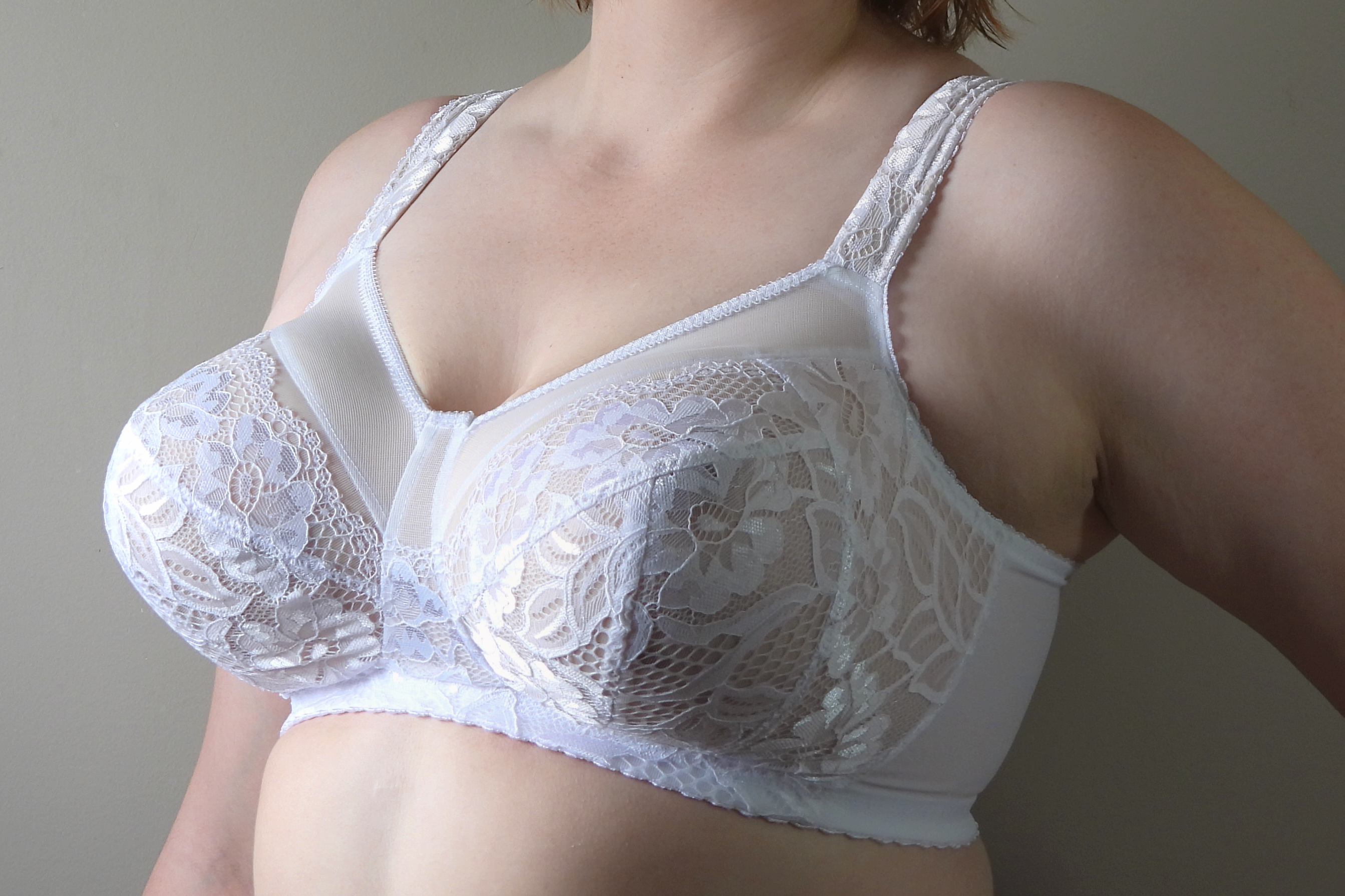
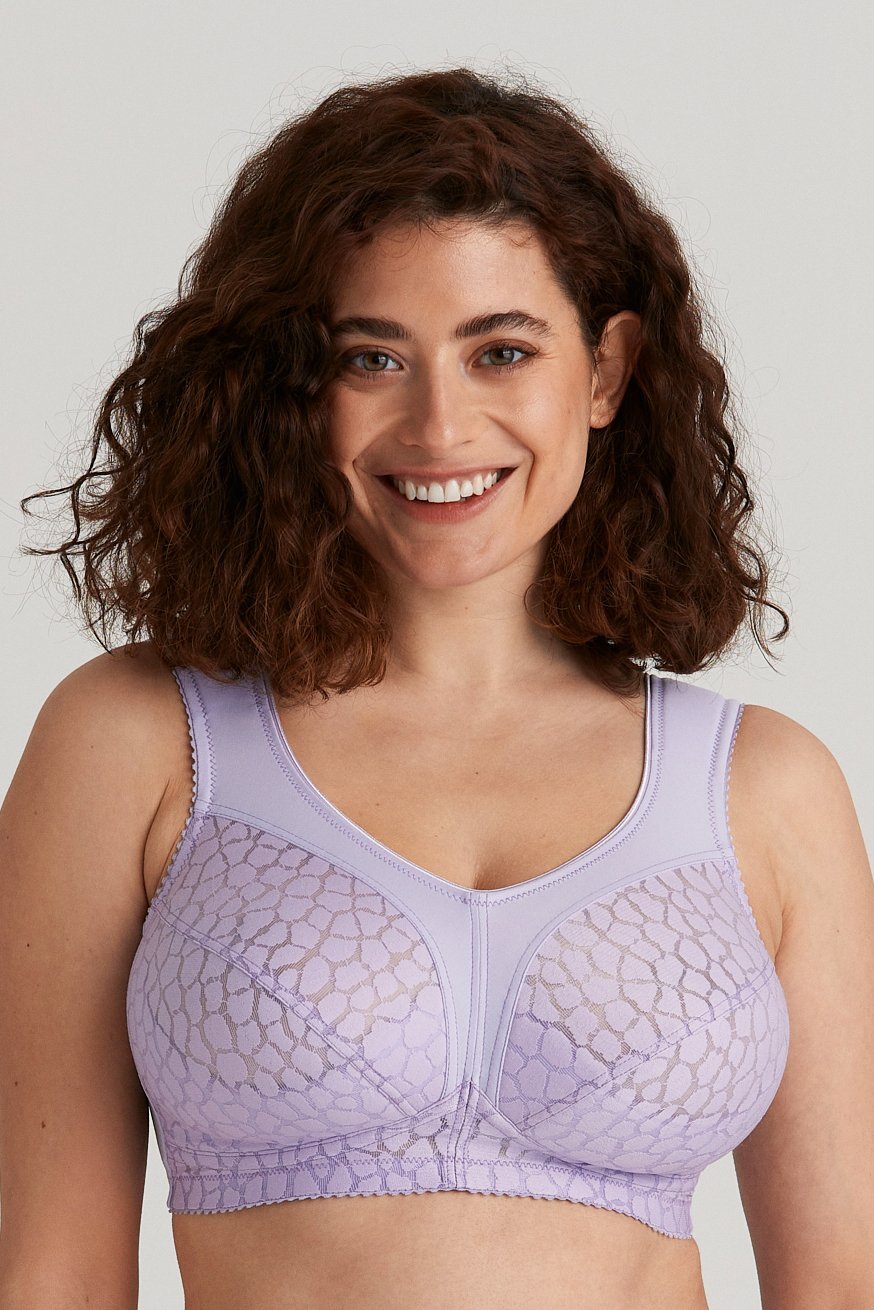
The Triumph Doreen, the Hugs for Your Jugs Orion (sewn and modelled by @toryalyssa), and the Miss Mary Lovely Jacquard bra
If you want the most support, this is where you need to look. Unfortunately these guys seem to be getting rarer and rarer, perhaps because they are perceived as old fashioned. They don’t have much hanger/product photo appeal but what they may lack in looks they more than make up for in function, these bras can be truly great.
A framed wireless bra uses a tight neckline, strap and armscye, combined with a tight band, to create a line of tension above and below the bust, letting the cups project out without flattening or compressing the bust
What shape a framed bra will give you
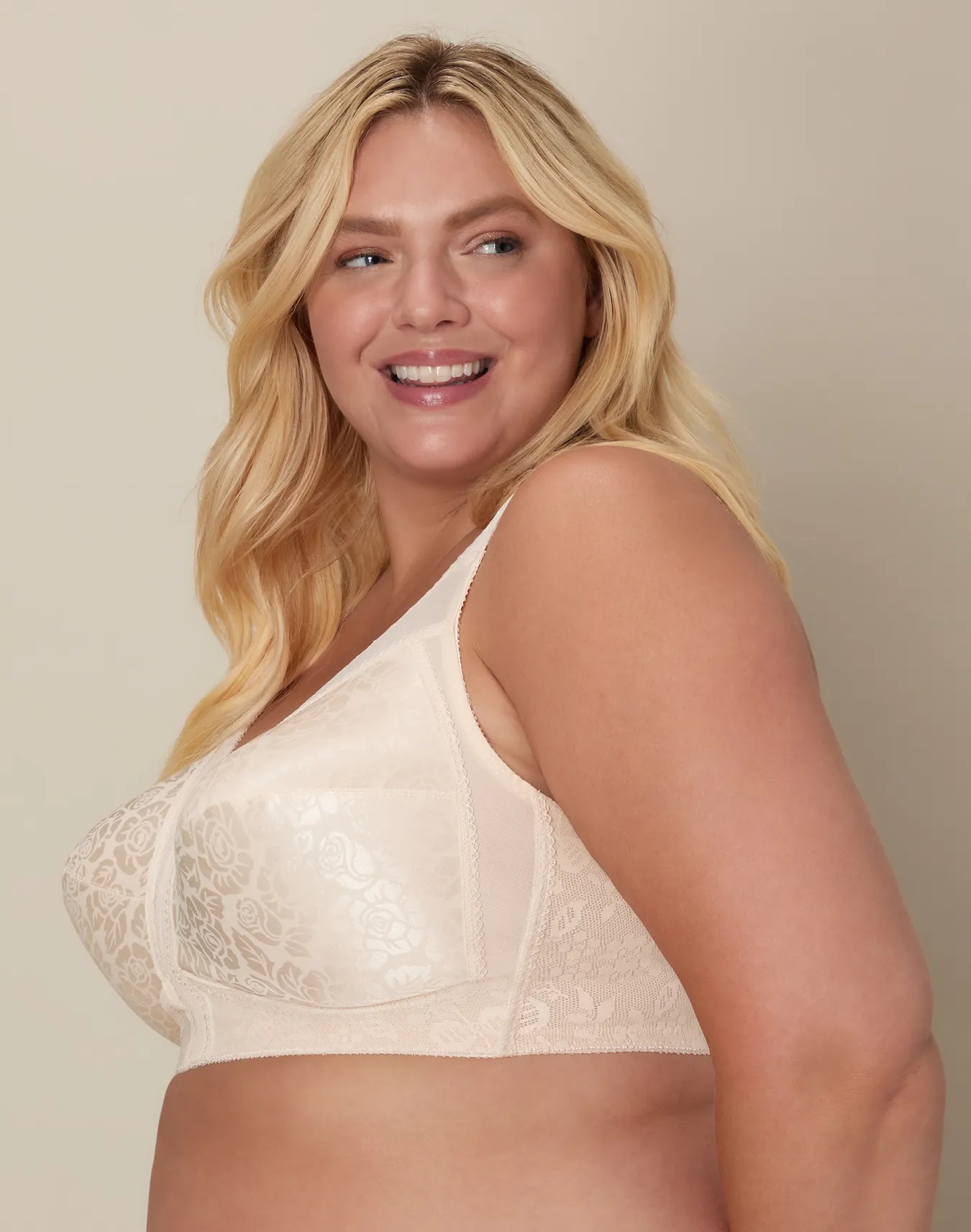
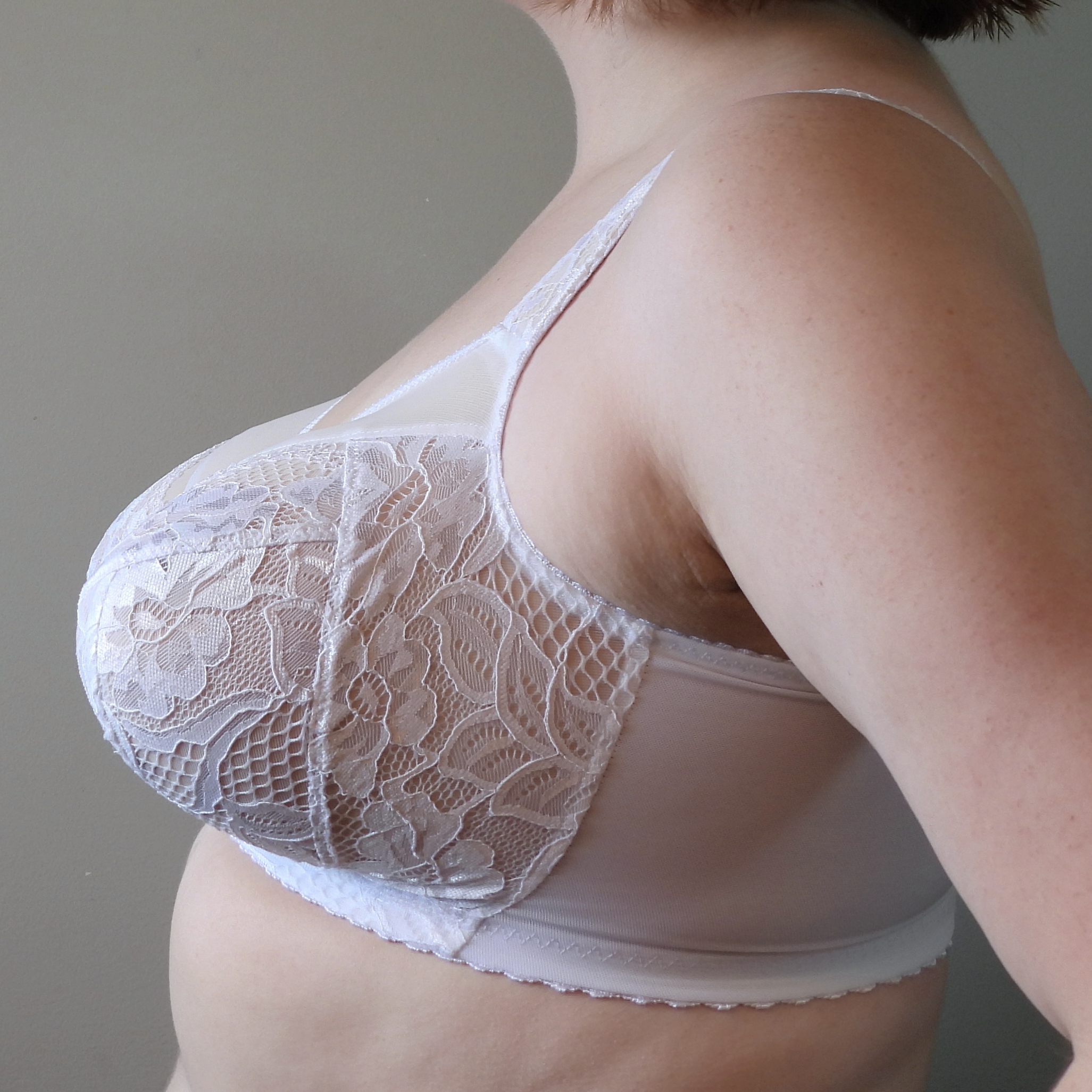
The Playtex 18 Hour Ultimate Shoulder Comfort leans pointy, the Hugs for Your Jugs Orion is designed with more roundness
These bras usually give a separated, uplifted look. Because they are high coverage they can sometimes compress the upper breast and become a bit pointy.
I actually designed a framed wireless bra of my own, the Orion sewing pattern – shown above. I love the lift and separation that framed bras can give but I am not a big pointy fan, and I also have a lot of inner/upper fullness that needs to be accommodated for. So in my bra I added a split upper cup, to allow for roundness in the upper breast, and I added a more rounded apex (at the expense of a more floating gore).
How to spot a framed wireless bra

The Playtex Cross-Your-Heart has that classic tight neckline and centred straps, but because the centre front is lower you get a more obvious cutting in effect
These have two universal features: a tight neckline (must be rigid fabric, not stretch) and high coverage to accommodate that tightness. You will see straps that are fairly centred and a diagonal neckline, both of these help bring the strap tension down to support the centre front of the bra which is most prone to collapse.
How to choose a framed wireless bra
A framed wireless bra can rival the support of a wired bra, but it will weight the straps a little more than its wired counterpart. Wide straps, possibly lined with foam, are key to get maximum lift and comfort.
Going for a bra that’s higher coverage will help to avoid the neckline cutting in, and be sure not to size up in an attempt to get more depth – it doesn’t work in a bra like this, just try a different model that’s closer to your actual shape. Ensure the neckline is sufficiently strong, if it stretches out the centre front will come away and your bra will act more like a compression style bra.
Ultimately there’s not a great amount of choice in this field, hopefully framed bras will have a renaissance when people realise just how good they can be!
These categories are not completely cut and dry, and most wireless bras will somewhat straddle these categories, but I hope this will help better inform your wireless bra choices, and let you better predict how a bra is going to fit before trying it on.
Members of Hugs for Your Jugs have access to an upcoming extension of this article – a series of posts where I discuss specific models of wireless bra and how they use and combine the strategies, to varying levels of effectiveness in different sizes. In particular I will discuss Molke bras, Panache Sophie/Andorra, Royce Cara, Royce Blossom, and the Bravissimo Florie.
Leave a Reply